
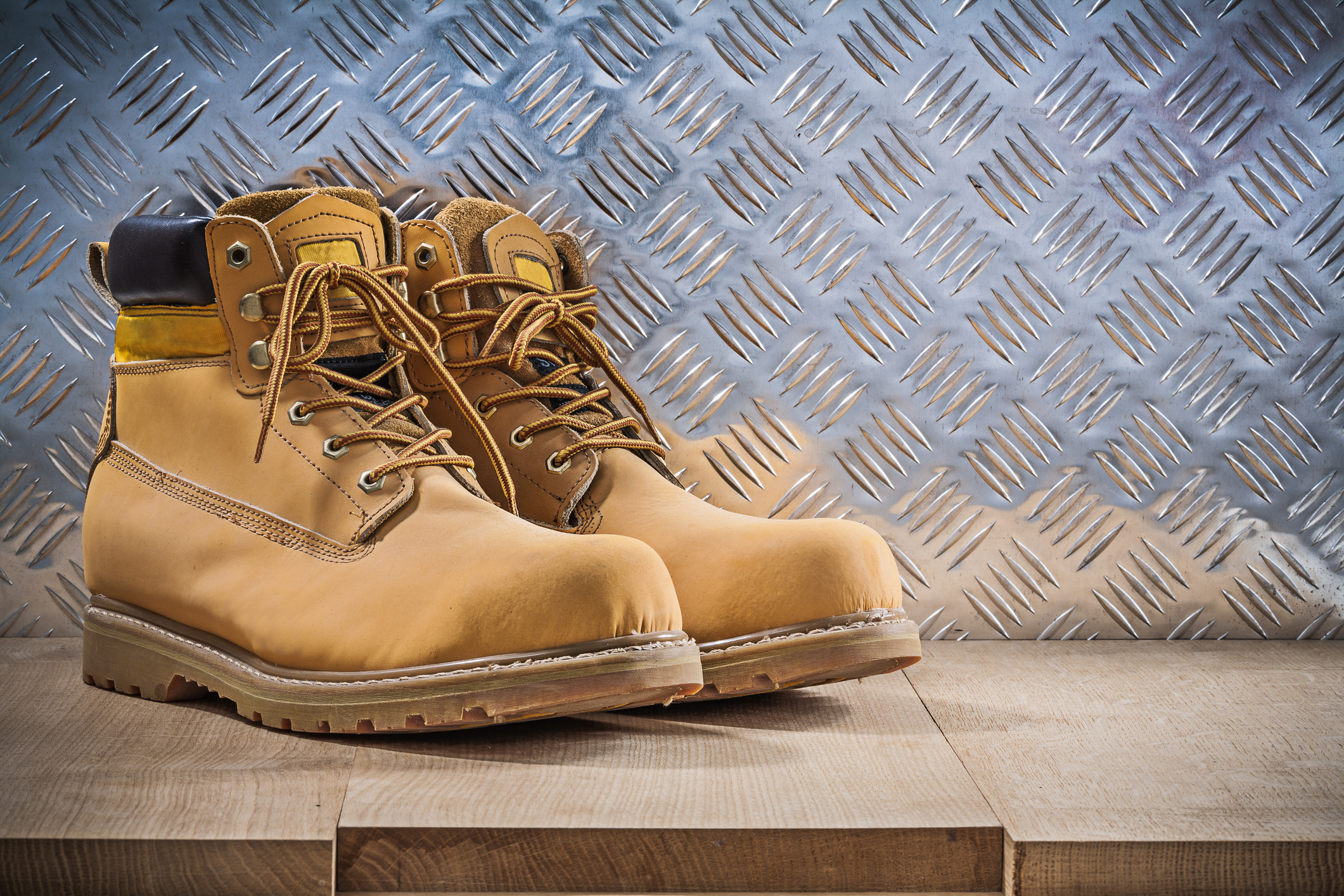
 A new study revealed that shoe tread has an impact on slips and falls, and that worn areas larger than the base of an AA battery put workers at risk, reported Occupational Health & Safety. The study, done at the University of Pittsburgh, sought to identify when shoes become unsafe.
There were $170.8 billion in workplace injuries in 2018, according to the National Safety Council. Slip-and-fall injuries were among the most common and most preventable. Wearing slip-resistant shoes help prevent slips and falls by using the channels in the tread to drain away fluid. However, as those channels wear down, it can create a “slipping effect similar to tires hydroplaning on a wet road,” noted the article. Unlike tires, however, the slipping effect had less to do with the depth of the tread and more to do with the size of the worn area.
The researchers then sought a universal measurement tool that workers could use to evaluate worn shoe tread. After considering pens and coins, they realized that the base of an AA battery offered the ideal measurement. Once the worn patch on a shoe grows beyond that size, there is a decline in function and the shoe should be replaced. Researchers are currently working with the National Traumatic Injury Prevention Council on creating signage around slip-and-fall safety using this measuring tool.
Not all workplace accidents are preventable, especially when someone on a jobsite was negligent. Contact us if you would like to talk about a specific incident. Our firm is recognized as a leader in litigating workplace injury cases throughout Pennsylvania.